Classificação científicaScientific classification
| Reino:Kingdom: | Animalia |
| Filo:Phylum: | Chordata |
| Classe:Class: | Mammalia |
| Ordem:Order: | Carnivora |
| Família:Family: | Canídeos |
| Gênero:Genus: | Chrysocyon |
| Espécie:Species: | C. brachyurus |
| Nome científico:Scientific name: | Chrysocyon brachyurusIlliger, 1815 |
| Nome em inglês:Portuguese name: | Maned WolfLobo-guará |
CaracterísticasCharacteristics
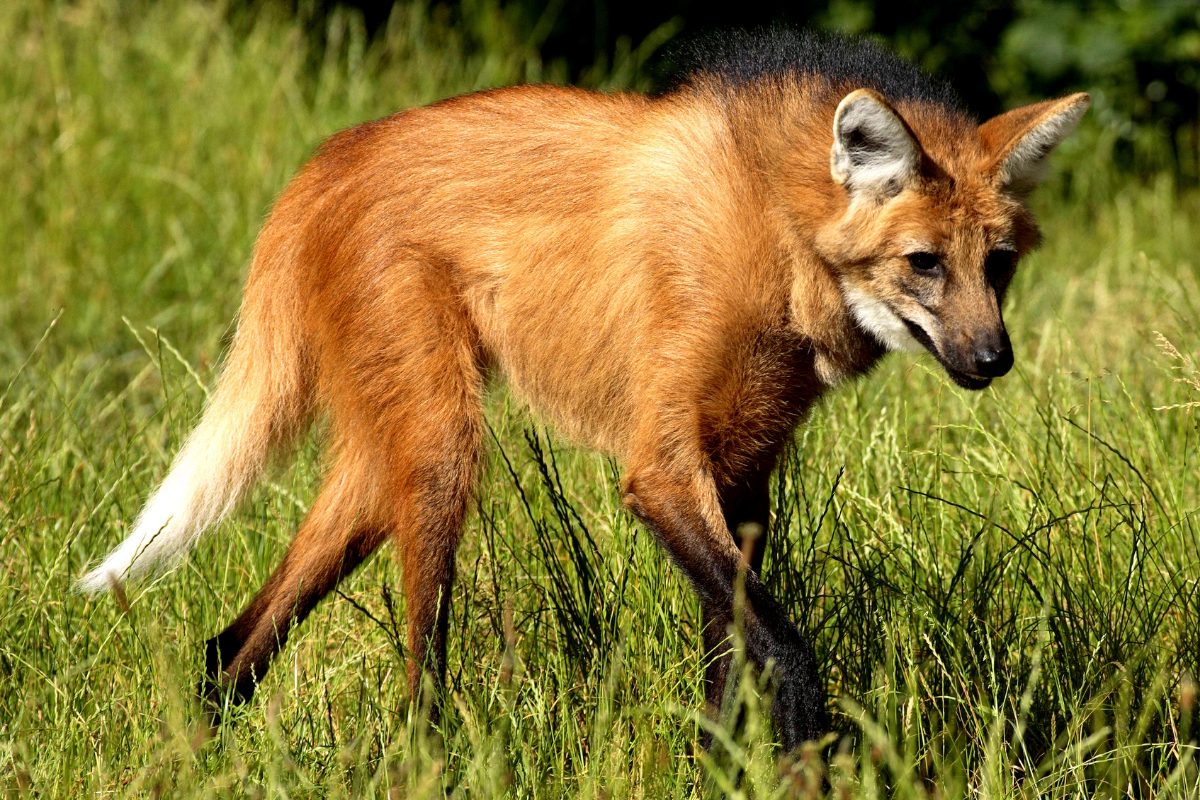
O lobo-guará é o maior canídeo da América do Sul. Possui corpo esguio, orelhas grandes e eretas e pernas muito longas, que podem ajudá-lo a enxergar e caminhar sobre a vegetação alta dos campos e savanas. Os adultos podem atingir cerca de 90 centímetros de altura na região dos ombros. Sua pelagem é predominantemente vermelho-alaranjada, com áreas pretas nas pernas, no focinho e na juba. A garganta e a ponta da cauda costumam apresentar coloração mais clara. A juba formada por pelos escuros e alongados pode ficar ereta quando o animal se sente ameaçado ou agitado, fazendo com que pareça maior. Apesar do nome e da aparência, o lobo-guará não é um lobo verdadeiro nem uma raposa. Ele pertence a uma linhagem própria e é o único representante vivo do gênero Chrysocyon.
The maned wolf is the largest canid in South America. It has a slender body, large upright ears, and exceptionally long legs, which help it walk through and see above tall grasslands. Adults may reach approximately 90 centimeters at the shoulder. Their coat is mainly reddish orange, with black areas on the legs, muzzle, and mane. The throat and the tip of the tail are usually lighter. The mane consists of long, dark hairs that may stand upright when the animal feels threatened or excited, making it appear larger. Despite its name and appearance, the maned wolf is neither a true wolf nor a fox. It belongs to its own evolutionary lineage and is the only living member of the genus Chrysocyon.
AlimentaçãoFeeding
O lobo-guará é onívoro e possui uma dieta bastante variada. Alimenta-se de pequenos mamíferos, aves, ovos, répteis, anfíbios, peixes, insetos, moluscos e outros animais que consegue capturar. Os frutos também representam uma parte importante de sua alimentação. Um dos mais conhecidos é a lobeira, ou fruta-do-lobo, cujo nome científico é Solanum lycocarpum. Também pode consumir goiabas, bananas e outros frutos disponíveis em seu território. Normalmente caça sozinho. Caminha lentamente pela vegetação, utilizando a audição para perceber pequenos animais escondidos. Ao localizar uma presa, pode saltar e atacá-la com as patas dianteiras. Embora ocasionalmente capture aves domésticas, sua alimentação é formada principalmente por animais silvestres de pequeno porte e vegetais.
The maned wolf is omnivorous and has a highly varied diet. It feeds on small mammals, birds, eggs, reptiles, amphibians, fish, insects, mollusks, and other animals it can capture. Fruit also represents an important part of its diet. One of the best-known examples is the wolf apple, scientifically named Solanum lycocarpum. It may also consume guavas, bananas, and other available fruit. It normally hunts alone. The animal walks slowly through the vegetation and uses its sensitive hearing to detect small prey hidden in the grass. After locating an animal, it may leap and strike it with its front paws. Although it may occasionally capture domestic poultry, its diet consists mainly of small wild animals and plant material.
ReproduçãoReproduction
Os lobos-guarás formam pares monogâmicos, mas o macho e a fêmea costumam permanecer separados durante grande parte do ano. A aproximação entre o casal ocorre principalmente no período reprodutivo. A gestação dura aproximadamente 65 dias e geralmente nascem de dois a cinco filhotes, embora ninhadas maiores possam ocorrer. A fêmea dá à luz em um abrigo protegido pela vegetação densa. Os filhotes nascem pequenos, com os olhos fechados e pelagem escura, tornando-se gradualmente avermelhados conforme crescem. Nas primeiras semanas, dependem completamente da mãe. O macho pode participar da proteção e do fornecimento de alimento, embora esse comportamento seja observado com maior frequência em animais mantidos sob cuidados humanos. Os jovens alcançam proporções semelhantes às dos adultos próximo ao primeiro ano de vida.
Maned wolves form monogamous pairs, although males and females usually remain apart for much of the year. The pair comes together mainly during the breeding season. Gestation lasts approximately 65 days, and females generally give birth to two to five pups, although larger litters may occur. The female gives birth in a sheltered place hidden by dense vegetation. The pups are born small, blind, and covered with dark fur, which gradually becomes reddish as they grow. During their first weeks, they depend entirely on their mother. The male may participate in protection and food provision, although this behavior has been more frequently observed in animals under human care. Young maned wolves develop adult-like body proportions at around one year of age.
HábitosHabits
O lobo-guará apresenta hábitos principalmente crepusculares e noturnos. Costuma ficar mais ativo no final da tarde, durante a noite e nas primeiras horas da manhã. Durante o dia, descansa em locais protegidos pela vegetação alta ou por arbustos. Apesar de formar casais estáveis, é normalmente observado sozinho. O macho e a fêmea podem compartilhar o mesmo território, mas caçam, caminham e descansam separadamente durante boa parte do tempo. Marca seu território com urina e fezes depositadas em locais estratégicos. Possui olfato e audição bem desenvolvidos e utiliza diferentes vocalizações para se comunicar. Uma de suas vocalizações mais conhecidas é um latido grave e forte, chamado popularmente de “latido de lobo-guará”, que pode ser ouvido a grande distância, especialmente após o anoitecer.
The maned wolf is mainly crepuscular and nocturnal. It is most active in the late afternoon, at night, and during the early morning. During the day, it rests in places protected by tall grass or shrubs. Although it forms stable breeding pairs, it is usually seen alone. The male and female may share the same territory but hunt, travel, and rest separately for much of the time. It marks its territory with urine and feces placed at strategic locations. Its senses of smell and hearing are well developed, and it uses several vocalizations to communicate. One of its best-known calls is a deep, powerful bark that can be heard over long distances, especially after nightfall.
Habitat
O lobo-guará vive principalmente em campos, cerrados, savanas, áreas de vegetação arbustiva, regiões pantanosas, bordas de florestas e ambientes próximos a rios. Prefere áreas abertas ou parcialmente abertas, onde suas pernas longas facilitam o deslocamento entre gramíneas e vegetação alta. No Pantanal, pode utilizar campos naturais, cerrados, áreas sazonalmente alagadas e regiões de transição entre ambientes abertos e formações florestais. Também pode aparecer em áreas rurais e paisagens modificadas, desde que encontre alimento, abrigo e espaço suficiente para se deslocar. Entretanto, estradas, incêndios, perda de habitat e conflitos com seres humanos representam riscos importantes.
The maned wolf mainly inhabits grasslands, Cerrado savannas, shrublands, wetlands, forest edges, and areas near rivers. It prefers open or partially open landscapes, where its long legs facilitate movement through tall grass and vegetation. In the Pantanal, it may use natural grasslands, Cerrado areas, seasonally flooded regions, and transitional zones between open habitats and forests. It may also occur in rural and modified landscapes if sufficient food, shelter, and space remain available. Roads, fires, habitat loss, and conflict with humans, however, represent significant threats.
Distribuição geográficaGeographic distribution
O lobo-guará ocorre principalmente na região central da América do Sul. Sua maior área de distribuição encontra-se no Brasil, especialmente no Cerrado e em regiões do Pantanal. Também existem populações na Bolívia, no Paraguai, no Peru e no norte da Argentina. Historicamente, a espécie também ocorria em áreas do Uruguai e em uma região mais ampla da Argentina, mas desapareceu ou se tornou muito rara em partes de sua antiga distribuição.
The maned wolf occurs mainly in central South America. Most of its range lies within Brazil, especially in the Cerrado and parts of the Pantanal. Populations also occur in Bolivia, Paraguay, Peru, and northern Argentina. Historically, the species also occurred in Uruguay and across a broader area of Argentina, but it has disappeared or become very rare in parts of its former range.
Importância ecológicaEcological importance
O lobo-guará desempenha funções importantes tanto como predador quanto como dispersor de sementes. Ao caçar roedores, insetos e outros pequenos animais, contribui para o controle natural dessas populações e para o equilíbrio da cadeia alimentar. Ao consumir frutos, especialmente a lobeira, transporta e elimina sementes em diferentes locais. Dessa forma, favorece a dispersão das plantas e a regeneração da vegetação. Sua presença também indica a existência de ambientes abertos relativamente preservados e com recursos suficientes para sustentar grandes mamíferos. Proteger o lobo-guará ajuda a conservar campos, cerrados, áreas úmidas e diversas outras espécies que compartilham os mesmos habitats.
The maned wolf performs important ecological functions as both a predator and a seed disperser. By hunting rodents, insects, and other small animals, it helps regulate their populations and maintain food-web balance. By eating fruit, particularly wolf apples, it carries and deposits seeds in different locations. It therefore contributes to plant dispersal and vegetation regeneration. Its presence also indicates the existence of relatively preserved open habitats with enough resources to support large mammals. Protecting the maned wolf helps conserve grasslands, Cerrado savannas, wetlands, and many other species that share the same habitats.
CuriosidadesFun facts
É o maior canídeo da América do Sul. Suas pernas longas ajudam na locomoção e na observação acima da vegetação alta. Apesar do nome, não é um lobo verdadeiro. É o único representante vivo do gênero Chrysocyon. A juba escura pode ficar ereta quando o animal está assustado ou ameaçado. A lobeira, também chamada fruta-do-lobo, é um dos alimentos mais conhecidos de sua dieta. Costuma viver sozinho, embora forme pares reprodutivos estáveis. Seu latido grave pode ser ouvido a grandes distâncias. Pode viver cerca de 13 a 15 anos sob cuidados humanos.
It is the largest canid in South America. Its long legs help it move through and see over tall vegetation. Despite its name, it is not a true wolf. It is the only living member of the genus Chrysocyon. Its dark mane can stand upright when the animal feels threatened. The wolf apple is one of the best-known foods in its diet. It is usually solitary, although it forms stable breeding pairs. Its deep bark can be heard over long distances. It may live approximately 13 to 15 years under human care.
ReferênciasReferences
Dietz. JM (1985). Espécies de mamíferos, nº 234, Sociedade Americana de Mamalogistas. pp 1-4. Macdonald, David. (1984). A Enciclopédia dos Mamíferos, Facts on File Publications, Nova Iorque, pp 82-83. Nowak, Ronald M., e Paradiso, John L. (1983). Walker's Mammals of the World, Vol. 2, Quarta Edição, The Johns Hopkins University Press, Baltimore e Londres, pp 957-958. Sheldon, Jennifer W. (1992). Cães selvagens: A história natural dos canídeos não domésticos, Academic Press Inc., San Diego, Califórnia, pp 69-75.