 Birds Cuiabá
 Birds Cuiabá
 Birds Cuiabá
 Birds Cuiabá
Classificação científicaScientific classification
| Reino:Kingdom: | Animalia |
| Filo:Phylum: | Chordata |
| Classe:Class: | Mammalia |
| Ordem:Order: | Carnivora |
| Família:Family: | Felídeos |
| Gênero:Genus: | Pantera |
| Espécie:Species: | P. onca |
| Nome científico:Scientific name: | Panthera oncaLineu, 1758 |
| Nome em inglês:Portuguese name: | JaguarOnça pintada |
CaracterísticasCharacteristics
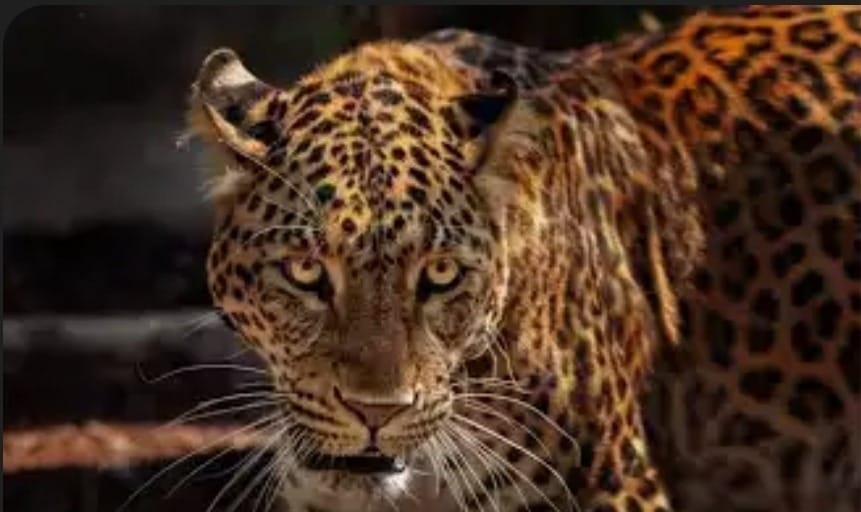
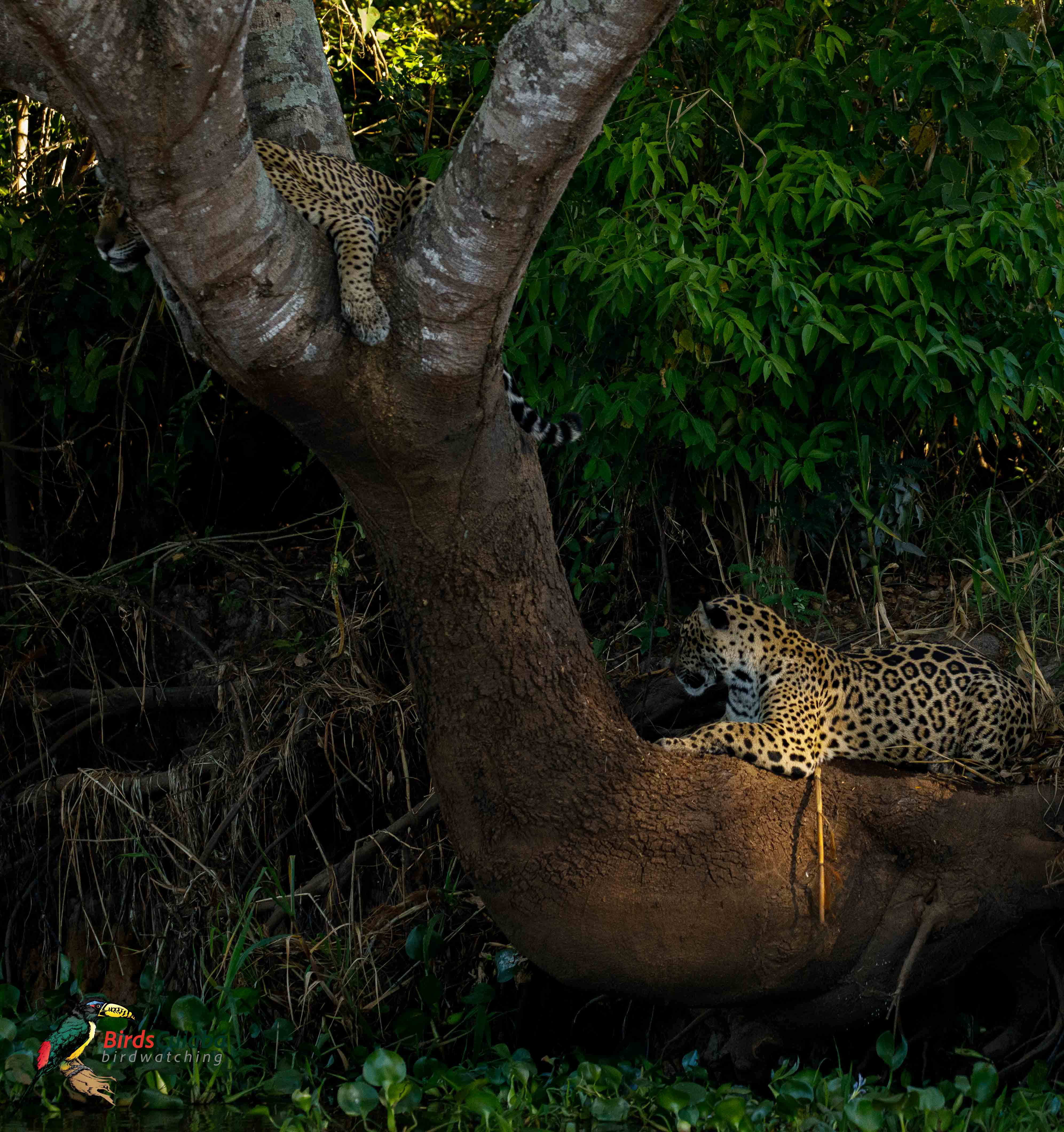
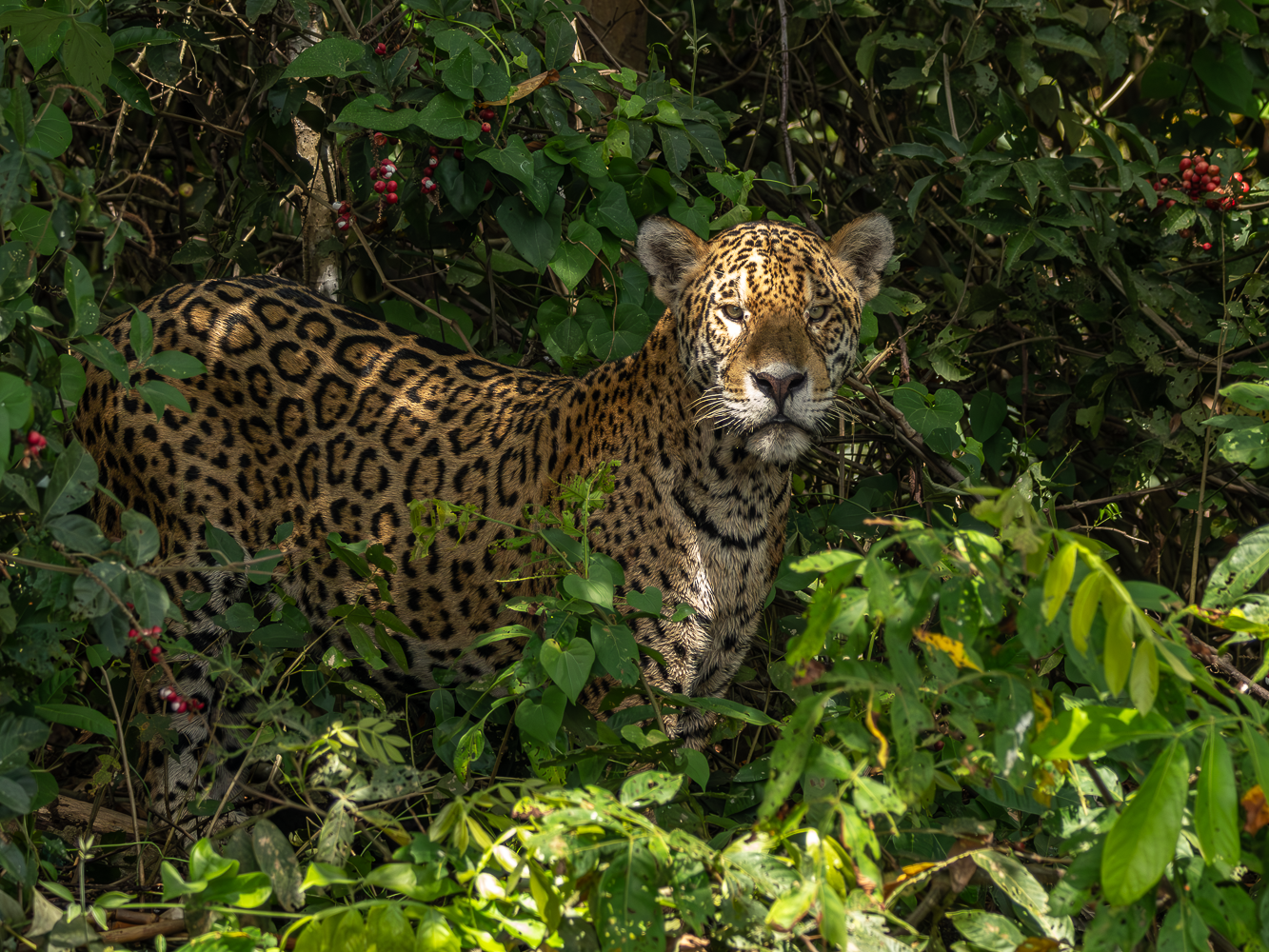
A onça-pintada é o maior felino das Américas e o terceiro maior do mundo, ficando atrás apenas do tigre e do leão. No Pantanal encontram-se alguns dos maiores indivíduos da espécie, onde machos podem ultrapassar 100 kg e as fêmeas geralmente pesam entre 60 e 80 kg. Seu corpo é forte e musculoso, com cabeça larga, mandíbulas extremamente poderosas e patas robustas. A pelagem varia do amarelo-dourado ao castanho-claro, coberta por manchas em forma de rosetas com pequenos pontos escuros no centro, padrão que torna cada animal único, como uma impressão digital. Embora consiga correr rapidamente por curtas distâncias, a onça foi feita principalmente para força e emboscadas. É excelente nadadora e escaladora, habilidades que a tornam uma das predadoras mais eficientes das florestas e áreas alagadas da América do Sul.
The jaguar is the largest wild cat in the Americas and the third largest feline in the world, after the tiger and the lion. The Brazilian Pantanal is home to some of the largest jaguars, where males can exceed 100 kg (220 lb), while females usually weigh between 60 and 80 kg (132–176 lb). Jaguars have a powerful, muscular body, a broad head, exceptionally strong jaws, and sturdy limbs. Their coat ranges from golden-yellow to light brown and is covered with black rosette-shaped spots, each with a unique pattern that serves as an individual identification. Although capable of short bursts of speed, jaguars rely primarily on strength and stealth. They are excellent swimmers and climbers, making them one of the most efficient predators in South America.
AlimentaçãoFeeding
A onça-pintada é um animal exclusivamente carnívoro e possui uma das dietas mais variadas entre todos os grandes felinos, com mais de 85 espécies registradas. No Pantanal, suas principais presas incluem: Capivaras Jacarés Catetos Queixadas Veados Antas Tatus Tamanduás Tartarugas Aves Peixes Ela caça principalmente ao amanhecer, entardecer e durante a noite, utilizando a estratégia da emboscada. Aproxima-se silenciosamente da presa e desfere uma mordida extremamente poderosa, capaz de perfurar até mesmo o crânio de jacarés e o casco de algumas tartarugas.
Jaguars are strictly carnivorous and have one of the most diverse diets among all big cats, with more than 85 recorded prey species. In the Pantanal, their preferred prey includes: Capybaras Caimans Collared peccaries White-lipped peccaries Deer Tapirs Armadillos Giant anteaters Turtles Birds Fish They hunt mainly at dawn, dusk, and during the night using ambush techniques. Their exceptionally powerful bite allows them to pierce the skulls of caimans and even crack the shells of turtles.
ReproduçãoReproduction
A reprodução pode ocorrer durante todo o ano, embora seja mais frequente nas épocas de maior oferta de alimento. Após uma gestação de aproximadamente 91 a 111 dias, normalmente nascem entre 1 e 4 filhotes, sendo 2 o número mais comum. Os filhotes permanecem com a mãe por cerca de 2 anos, período em que aprendem a caçar, nadar, reconhecer seu território e sobreviver na natureza. As fêmeas geralmente têm uma nova ninhada a cada dois anos.
Jaguars can reproduce throughout the year, although births are more common during seasons when prey is abundant. After a gestation period of approximately 91 to 111 days, females usually give birth to one to four cubs, with two being the most common. The cubs stay with their mother for about two years, learning essential survival skills such as hunting, swimming, and defending their territory. Females generally reproduce every two years.
Habitat
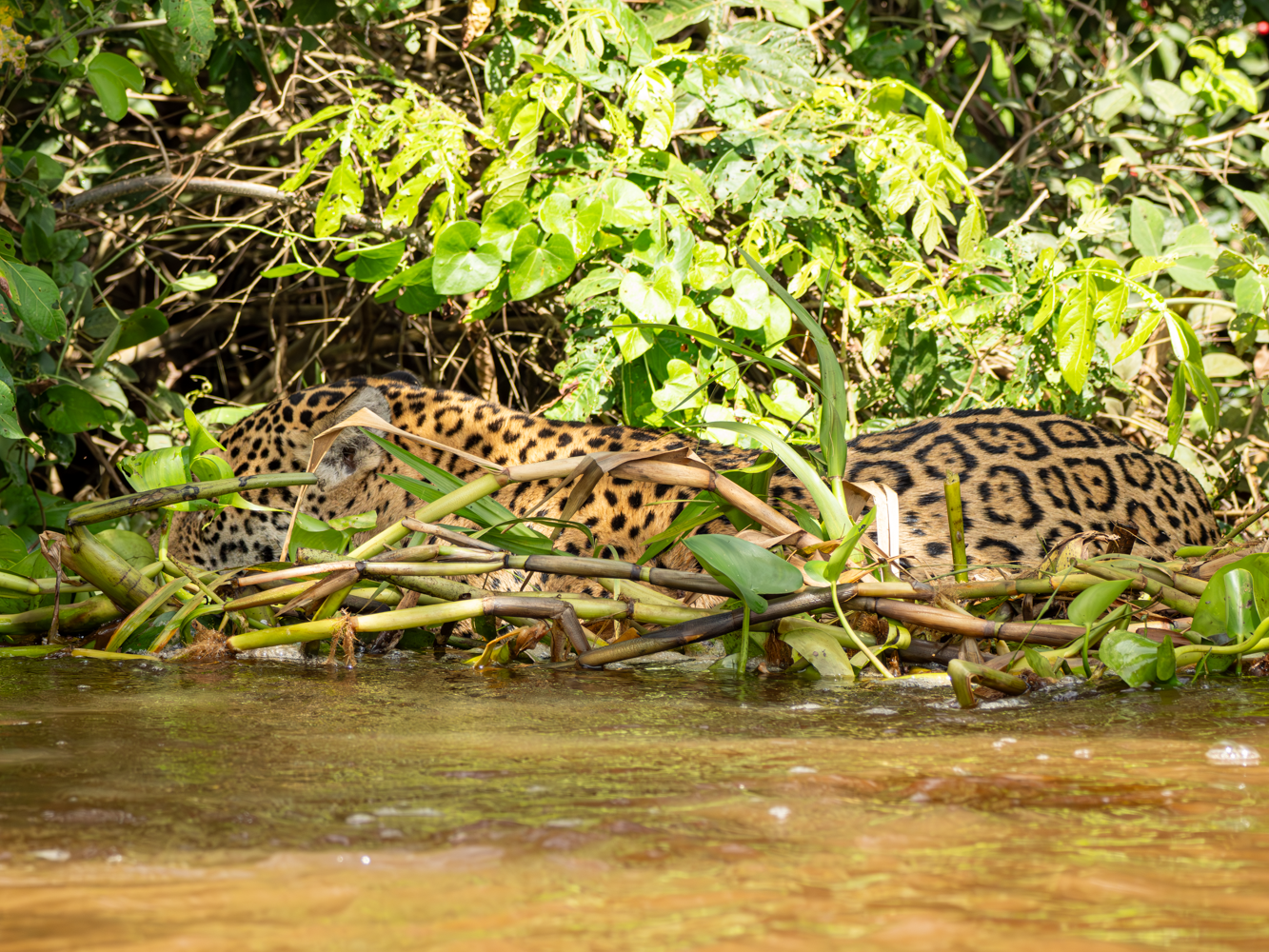
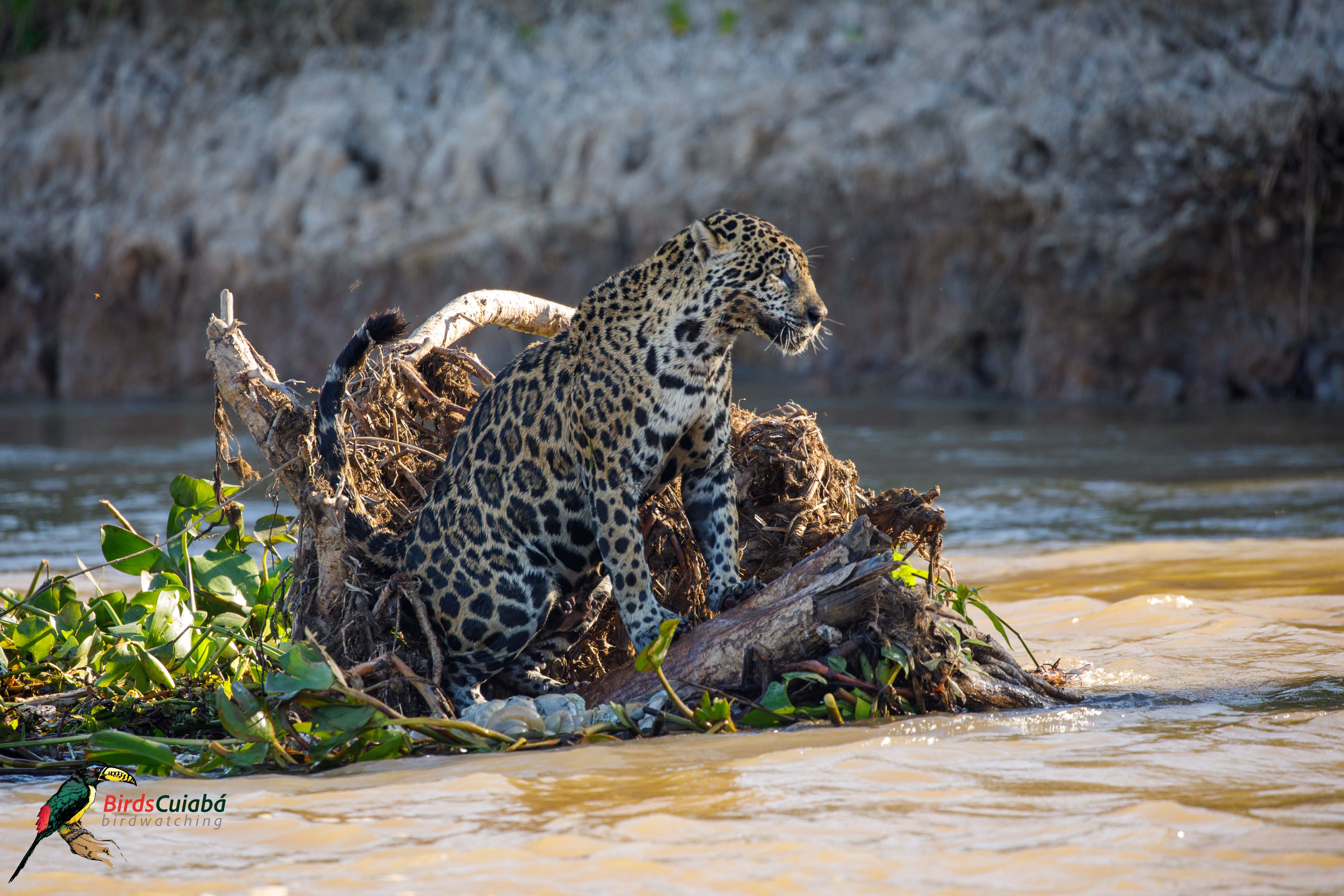
A onça-pintada vive em diversos ambientes, como florestas tropicais, matas ciliares, cerrados, áreas de várzea e regiões alagadas. O Pantanal é considerado um dos melhores locais do planeta para a conservação da espécie, pois oferece abundância de água, vegetação e grande disponibilidade de presas durante todo o ano. Ela costuma permanecer próxima a rios, baías, lagoas e corixos, utilizando a vegetação densa como abrigo para descansar e caçar.
Jaguars inhabit tropical forests, gallery forests, wetlands, savannas, and floodplains. The Pantanal is considered one of the world's most important strongholds for the species because it provides abundant water, dense vegetation, and plentiful prey throughout the year. They usually stay close to rivers, lakes, marshes, and flooded forests, where they find shelter and ideal hunting conditions.
Distribuição geográficaGeographic distribution
A onça-pintada é presente desde o México, passando pela América Central, até a América do Sul, incluindo toda a bacia Amazônica, no Brasil. Os países que a onça-pintada pode ser encontrada são: Argentina, Belize, Brasil, Bolívia, Colômbia, Costa Rica , Equador, Guiana Francesa, Guatemala, Guiana, Honduras, México, Nicarágu, Panamá, Paraguai, Peru, Suriname, Estados Unidos e Venezuela.
The jaguar is found from Mexico, through Central America, to South America, including the entire Amazon basin in Brazil. The countries where the jaguar can be found are: Argentina, Belize, Brazil, Bolivia, Colombia, Costa Rica, Ecuador, French Guiana, Guatemala, Guyana, Honduras, Mexico, Nicaragua, Panama, Paraguay, Peru, Suriname, the United States, and Venezuela.
CuriosidadesFun facts
A onça-pintada é considerada um predador de topo e uma das espécies mais importantes do Pantanal. Sua presença indica um ambiente saudável, pois ela depende de grandes áreas preservadas, água limpa e abundância de presas. Quando existe uma população estável de onças, normalmente significa que toda a cadeia alimentar está funcionando de forma equilibrada. Ao controlar naturalmente as populações de capivaras, jacarés, veados, catetos e outros animais, a onça ajuda a evitar desequilíbrios ecológicos, contribuindo para a conservação da biodiversidade. Por esse motivo, a onça-pintada é considerada uma espécie-chave: proteger a onça significa proteger milhares de outras espécies que compartilham o mesmo habitat. • É o maior felino das Américas. • Possui a mordida mais forte entre todos os grandes felinos em relação ao tamanho do corpo. • Cada onça possui um desenho exclusivo de manchas. • É excelente nadadora e frequentemente atravessa rios e lagoas. • No Pantanal é mais facilmente observada do que em qualquer outra região do mundo.
The jaguar is an apex predator and one of the most important species in the Pantanal ecosystem. Its presence is a strong indicator of a healthy environment because jaguars require extensive preserved habitats, clean water, and abundant prey. By naturally regulating populations of capybaras, caimans, deer, peccaries, and many other animals, jaguars help maintain ecological balance and preserve biodiversity. For this reason, the jaguar is considered a keystone species: protecting jaguars also protects countless other plants and animals that depend on the same ecosystem. • Largest wild cat in the Americas. • Has the strongest bite relative to body size among all big cats. • Every jaguar has a unique rosette pattern. • Excellent swimmer and often crosses rivers and wetlands. • The Pantanal is considered one of the best places in the world to observe jaguars in the wild.