 Birds Cuiabá
 Birds Cuiabá
 Birds Cuiabá
Classificação científicaScientific classification
| Reino:Kingdom: | Animalia |
| Filo:Phylum: | Chordata |
| Classe:Class: | Reptilia |
| Ordem:Order: | Crocodilia |
| Família:Family: | Alligatoridae |
| Gênero:Genus: | Caiman |
| Espécie:Species: | C. yacare |
| Nome científico:Scientific name: | Caiman yacareDaudin, 1802 |
| Nome em inglês:Portuguese name: | Yacare CaimanJacaré |
CaracterísticasCharacteristics
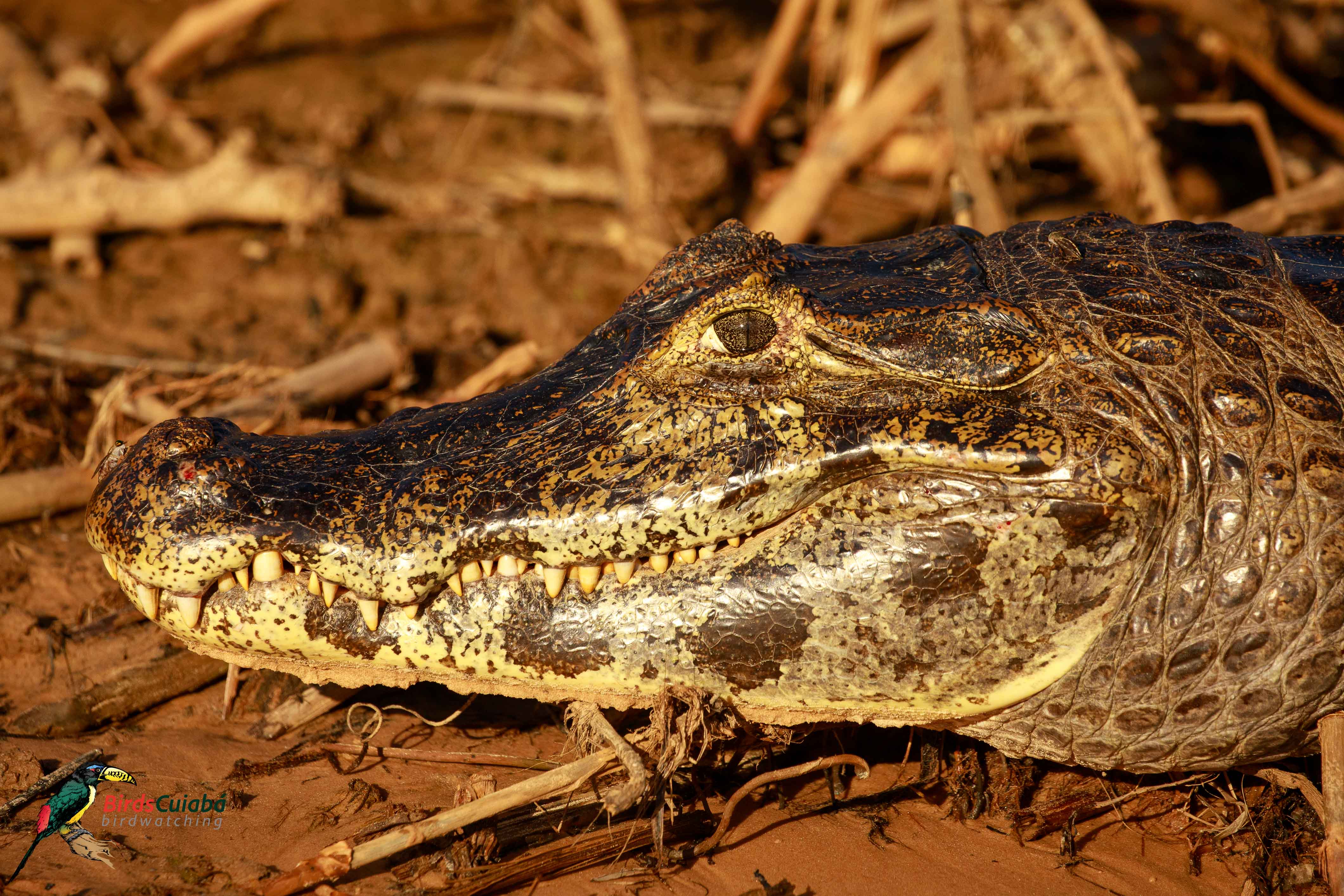
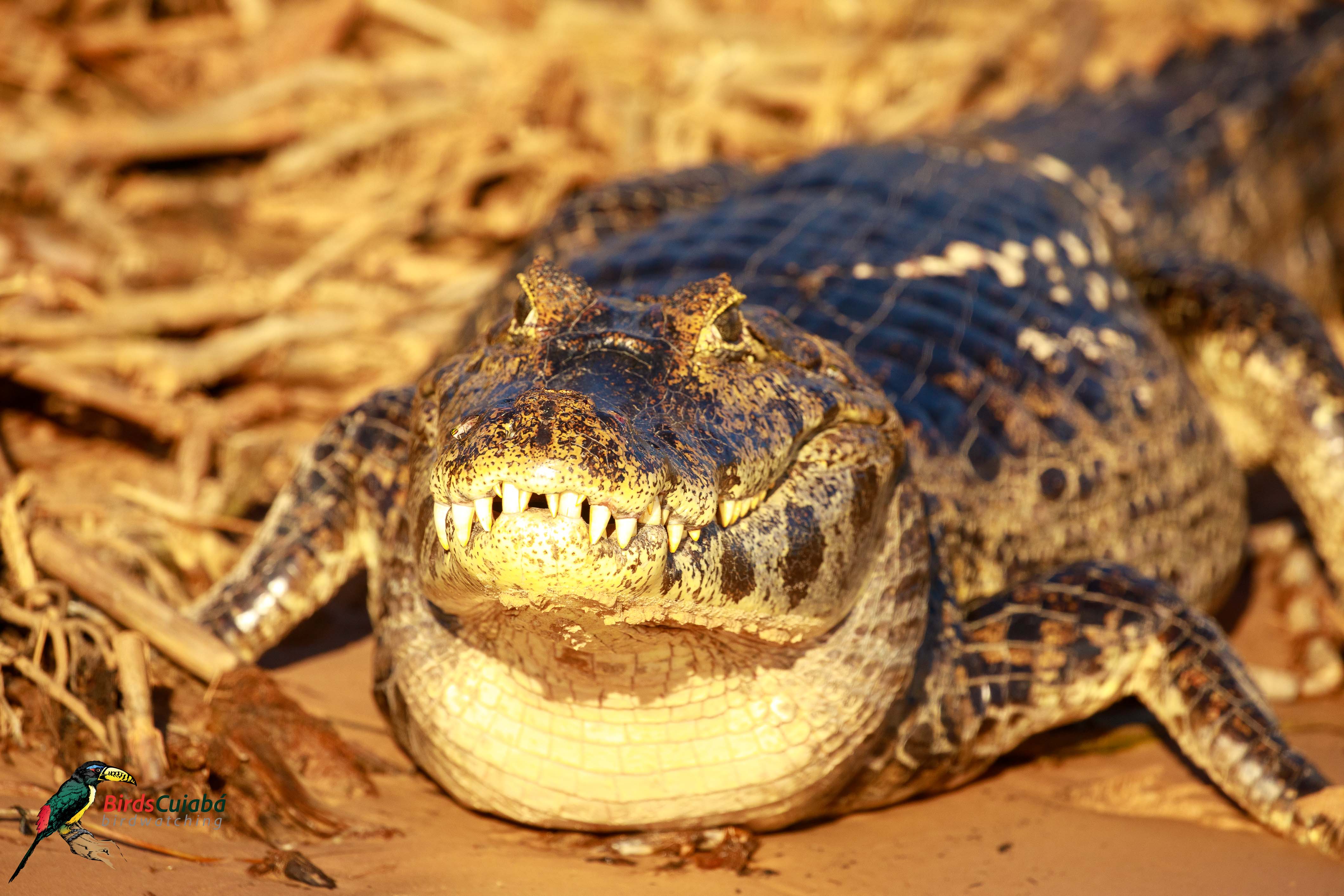
O jacaré-do-pantanal é um dos répteis mais emblemáticos do Pantanal e pertence à família Alligatoridae. Possui corpo robusto, cauda musculosa e pele protegida por placas ósseas que funcionam como uma armadura natural. Os adultos medem geralmente entre 2 e 3 metros de comprimento, embora alguns machos possam atingir tamanhos maiores. Sua coloração varia entre o verde-oliva e o marrom-escuro, com faixas amareladas mais visíveis na cauda, especialmente nos indivíduos jovens. Uma característica marcante é que, mesmo com a boca fechada, alguns dentes inferiores permanecem aparentes, motivo pelo qual também recebe o nome de jacaré-piranha.
The Yacare caiman is one of the most iconic reptiles of the Pantanal and belongs to the family Alligatoridae. It has a robust body, a muscular tail, and skin protected by bony plates that act as natural armor. Adults generally measure between 2 and 3 meters in length, although some males may grow larger. Their coloration ranges from olive green to dark brown, with yellowish bands that are especially visible on the tail of younger individuals. A distinctive feature is that several lower teeth remain visible even when the mouth is closed, giving rise to the common name "piranha caiman."
AlimentaçãoFeeding
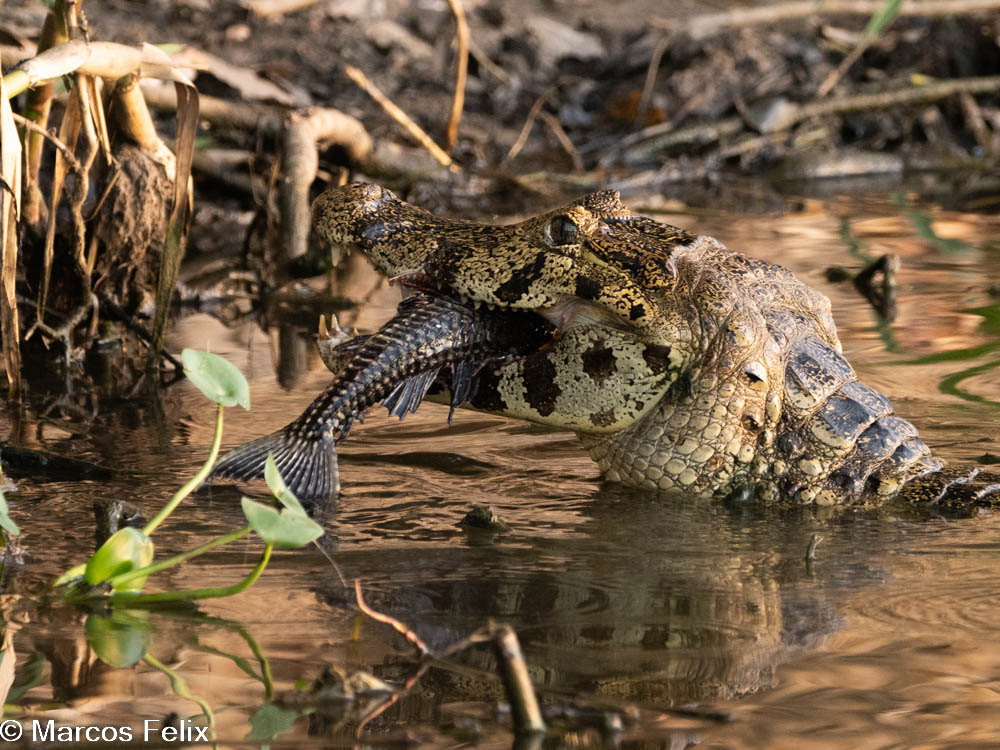
O jacaré-do-pantanal é carnívoro e um predador oportunista. Sua alimentação é composta principalmente por peixes, crustáceos, moluscos, anfíbios, aves aquáticas, serpentes e pequenos mamíferos. Os indivíduos jovens alimentam-se principalmente de insetos e pequenos invertebrados. Durante a estação seca, quando os peixes ficam concentrados nas lagoas, sua eficiência de caça aumenta significativamente.
The Yacare caiman is a carnivorous opportunistic predator. Its diet consists mainly of fish, crustaceans, mollusks, amphibians, aquatic birds, snakes, and small mammals. Juveniles feed mostly on insects and other invertebrates. During the dry season, fish become concentrated in shrinking water bodies, making hunting more efficient.
ReproduçãoReproduction
A reprodução ocorre durante a estação chuvosa. Entre janeiro e março, a fêmea constrói um ninho utilizando folhas, galhos e vegetação próxima às margens de lagoas e rios. São depositados normalmente entre 20 e 30 ovos, que permanecem incubando durante aproximadamente 70 a 80 dias. A mãe protege o ninho contra predadores e permanece nas proximidades até a eclosão. Após o nascimento, ajuda os filhotes a chegarem à água, aumentando suas chances de sobrevivência. O sexo dos filhotes é determinado pela temperatura do ninho durante a incubação.
Breeding takes place during the rainy season. Between January and March, the female builds a nest using leaves, branches, and surrounding vegetation near rivers and lagoons. She usually lays 20 to 30 eggs, which incubate for approximately 70 to 80 days. The female guards the nest and remains nearby until the eggs hatch. After hatching, she helps the young reach the water, increasing their chances of survival. The sex of the hatchlings depends on the incubation temperature.
HábitosHabits
O jacaré-do-pantanal possui hábitos principalmente noturnos, embora possa ser observado tomando sol durante o dia para regular sua temperatura corporal. É excelente nadador e passa grande parte da vida em rios, baías, corixos e lagoas. Durante períodos de seca intensa pode permanecer em poças remanescentes ou escavar pequenas depressões úmidas para sobreviver. Apesar da aparência intimidadora, normalmente evita o contato com seres humanos quando não é provocado.
The Yacare caiman is mainly nocturnal but is often seen basking in the sun during the day to regulate its body temperature. It is an excellent swimmer and spends most of its life in rivers, lakes, wetlands, and channels. During severe droughts, it may remain in isolated pools or dig shallow depressions to retain moisture. Although it appears intimidating, it usually avoids human contact unless threatened.
Habitat
Habita rios, lagoas, baías, corixos, brejos e áreas alagadas. No Pantanal é encontrado praticamente em toda a planície inundável, utilizando tanto grandes rios quanto pequenas lagoas temporárias. Prefere ambientes com vegetação aquática abundante e margens protegidas para construção dos ninhos.
It inhabits rivers, lakes, marshes, wetlands, and seasonally flooded areas. In the Pantanal, it is found throughout the floodplain, occupying both large rivers and temporary lagoons. It prefers aquatic environments with abundant vegetation and protected banks suitable for nesting.
Distribuição geográficaGeographic distribution
O jacaré-do-pantanal ocorre na região central da América do Sul. Está presente no Brasil, principalmente no Pantanal dos estados de Mato Grosso e Mato Grosso do Sul, além de ocorrer na Bolívia, Paraguai e norte da Argentina, acompanhando principalmente a Bacia do Rio Paraguai.
The Yacare caiman occurs in central South America. It is found in Brazil, especially throughout the Pantanal, as well as in Bolivia, Paraguay, and northern Argentina, mainly within the Paraguay River Basin.
Importância ecológicaEcological importance
O jacaré-do-pantanal é um dos principais predadores dos ambientes aquáticos pantaneiros. Controla populações de peixes, moluscos e outros animais aquáticos, contribuindo para o equilíbrio do ecossistema. Suas fezes fornecem nutrientes importantes para diversos organismos aquáticos e servem de alimento para pequenos peixes e invertebrados. Além disso, ovos e filhotes fazem parte da dieta de aves, serpentes, mamíferos e grandes peixes, integrando a cadeia alimentar do Pantanal. Sua presença é considerada um importante indicador da qualidade dos ambientes aquáticos.
The Yacare caiman is one of the top predators of Pantanal wetlands. It helps regulate populations of fish, mollusks, and other aquatic animals, maintaining ecological balance. Its feces recycle nutrients that benefit aquatic organisms and serve as food for small fish and invertebrates. Its eggs and hatchlings also provide food for birds, snakes, mammals, and large fish, making it an important part of the Pantanal food web. Its presence is considered an indicator of healthy wetland ecosystems.
CuriosidadesFun facts
É um dos animais mais abundantes do Pantanal. Também é conhecido como jacaré-do-paraguai ou jacaré-piranha. Pode permanecer vários minutos completamente submerso. Regula a temperatura corporal tomando sol nas margens dos rios. A determinação do sexo dos filhotes depende da temperatura do ninho. A mãe protege os ovos e auxilia os filhotes logo após a eclosão. Possui visão e audição muito eficientes, especialmente durante a noite.
One of the most abundant animals in the Pantanal. Also known as the Paraguay caiman or piranha caiman. Can remain underwater for several minutes. Basks in the sun to regulate body temperature. Hatchling sex depends on nest temperature. Females protect the nest and assist the young after hatching. Has excellent vision and hearing, especially at night.
ReferênciasReferences
ICMBio Embrapa Pantanal Instituto Homem Pantaneiro (IHP) IUCN Red List Animal Diversity Web (Universidade de Michigan) l acessado em 24/07/2026